The significance of The Freedom Ride: Charles Perkins
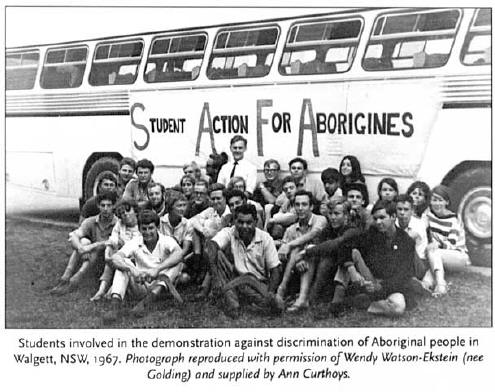
In 1965 Charles Perkins was one of the key members of the Freedom Ride which was a bus tour through New South Wales by activists protesting discrimination against Aboriginal people in small town Australia. This action was inspired by the US Civil Rights Freedom Ride campaign in 1961. The Australian Freedom Ride's aim was to expose the horrirs in the living, education and health conditions among the Aboriginals. The tour targeted rural towns and they aimed tomake public the acts of obvious discrimination. At one stage during the Rides, the protesters' bus was run off the road.
On 20 February 1965, Perkins and his party tried to enter the swimming pool at Moree, where the local council had stopped Aboriginal people from swimming for 40 years since it had first opened. Because of this action they faced physical opposition from several hundred local white Australians, including community leaders, and were pelted with eggs and tomatoes. This was broadcast across Australia, and under pressure from public opinion, the council eventually reversed the ban on Aboriginal swimmers.
This trip became known as the Freedom Ride and assumed iconic status as the students ensured that they had press coverage for the conflicts which occurred in these towns. Their effective use of television brought the issue of racial discrimination in country towns to national attention. Perkins' role in this action propelled him to a position as a national Aboriginal leader and spokesman, a position he held until his death.
In the post-referendum period, Charles Perkins was critical of the Federal Council, Perkins believed it had not done enough to share power with Aboriginal members. In 1965 Perkins became the manager of the Foundation for Aboriginal Affairs in Sydney, and in 1969 he moved to Canberra to begin work in the Office of Aboriginal Affairs, which was set up by Prime Minister Harold Holt. By 1984 Perkins was Secretary of the Department of Aboriginal Affairs, the first Aboriginal Australian to be in such a position in the bureaucracy. After being a public servant Perkins played key roles on the boards of Aboriginal arts, sport and media organisations. As well he was a member of the Aboriginal and Torres Straits Islander Commission (ATSIC) and of the Arrente Council of Central Australia.
If the Freedom Ride and Charles Perkins didn't happen, then the world probably wouldn't be as it is today with equal rights of aboriginals to other races. It helped to make Australia the way it is today.